


KATHMANDU, Aug 29 — Nepali army rescue teams were using drilling equipment on Saturday seeking to rescue more than 100 people trapped inside a hydropower tunnel, three days after devastating floods struck the site.
“The government has been continuing efforts... to rescue people trapped inside the tunnel of the Trishuli 3A Hydropower Project in Rasuwa,” Nepal’s prime minister’s office said in a statement.
“As part of these efforts, work to clear the tunnel entrance has been intensified since early Saturday morning,” it added.
Photographs shared by the office showed workers wading through churned mud and navigating vast boulders left by the floods.
It said that 82 personnel, including both army and police, were working to “excavate the tunnel entrance”.
But it added that the rescue effort has become “extremely challenging” due to adverse weather conditions.
On Thursday, the office said that the army had already rescued 350 people from the site under “extremely risky” conditions, but that more than 100 remained trapped.
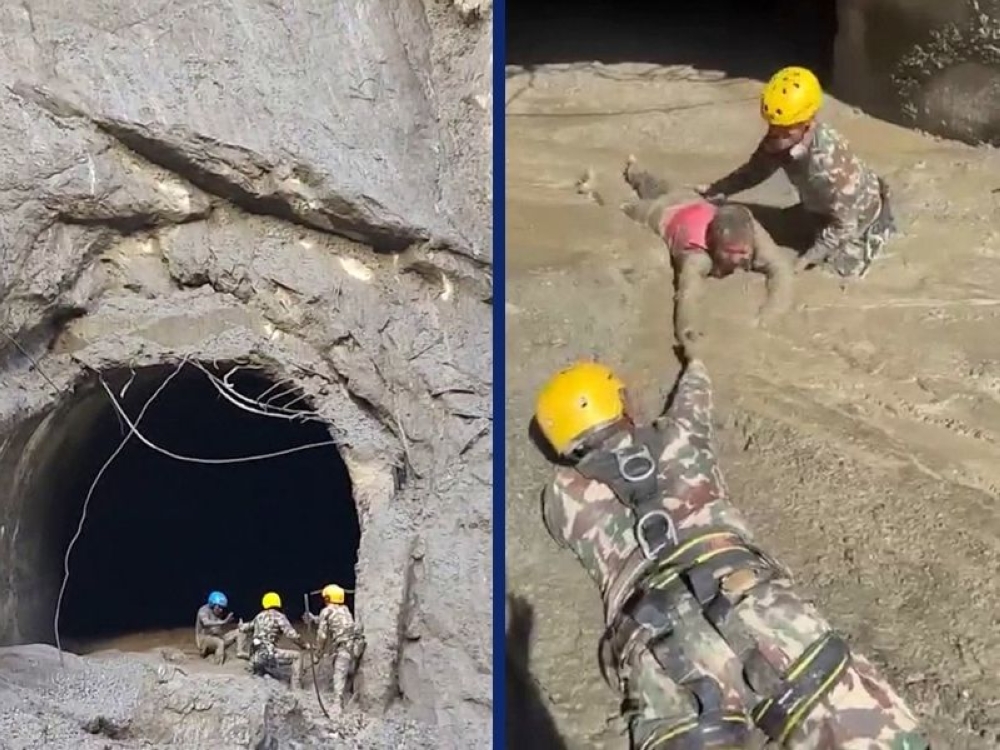
A Nepal Army statement said Saturday that rescuers were “using equipment including drilling machines in an effort to locate the outer section of the tunnel”.
India has sent a specialised tunnel rescue team following a request from Nepal to help, which had reached Trishuli, Nepal’s prime minister’s office added, saying it would first “conduct an initial aerial survey”.
India has extensive experience with difficult Himalayan tunnel rescues, including teams of so-called “rat-hole” miners trained in being able to crawl into narrow spaces.
Those trapped are among the 933 workers on hydropower projects on the rivers where a wall of water powered down on Wednesday morning, according to the National Disaster Risk Reduction and Management Authority.
The US Geological Survey said the disaster on Wednesday on the Tibet-Nepal border was caused by a glacial collapse that created a torrent of debris, with nearly 3,000 missing and 633 confirmed dead. — AFP


