


NOVEMBER 14 — The events of November 13, 2026, have demonstrated how vulnerable even the world’s most technologically advanced country can be.
The Federal Aviation Administration (FAA) ordered a nationwide ground stop lasting more than four hours. Thousands of flights were delayed or cancelled.
International aviation was disrupted, leaving passengers stranded far beyond American shores.
The crisis occurred in the same week as a major Microsoft systems outage affecting businesses and public institutions.
Yet American officials have indicated that the two incidents were unrelated.
Preliminary findings pointed towards ageing aviation technology and telecommunications failures rather than a malicious cyberattack.
This is precisely why evidence must prevail over speculation.
The coincidence of two technological failures does not prove that they share the same cause. Neither does the scale of the disruption automatically establish foreign interference.
Indeed, if the United States, with its immense technological resources, can suffer such systemic failures, Washington must exercise considerable humility before attributing similar disruptions elsewhere to hostile powers.
The same principle applies to the extraordinary controversy surrounding Jensen Huang, the former chief executive officer of Nvidia.
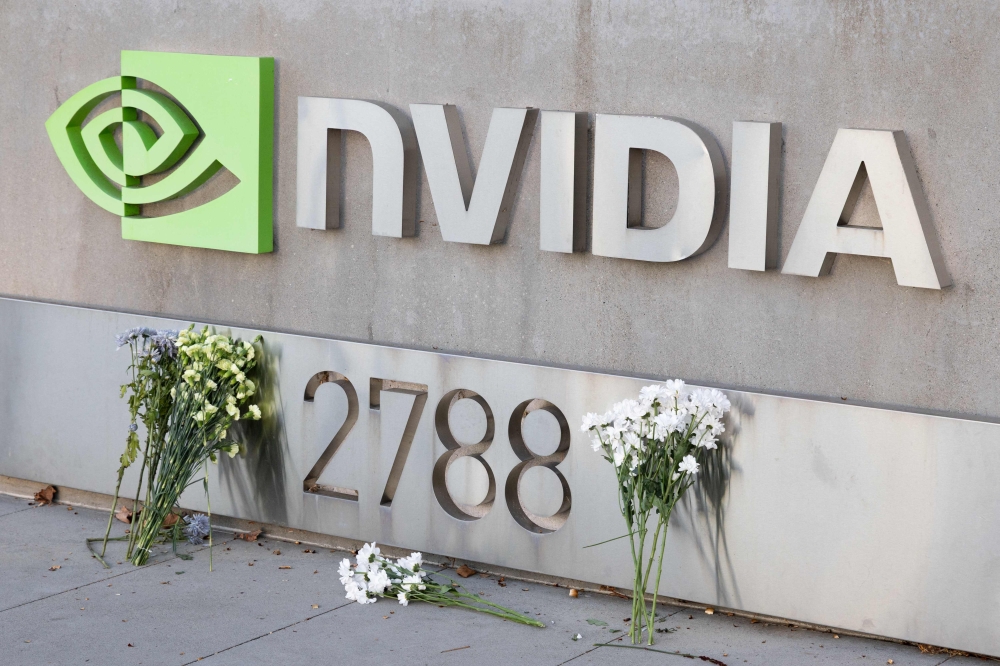
Huang resigned on November 11 following revelations concerning extramarital relationships, including reported affairs involving two Nvidia employees.
Reports have also linked him romantically to Alice Huang, a Chinese businesswoman whom American intelligence officials reportedly suspected of espionage.
However, suspicion is not proof.
There has been no publicly established finding demonstrating that Alice Huang was acting as a Chinese intelligence operative. Nor has it been established that Jensen Huang knowingly transferred sensitive American technology to Chinese intelligence.
The distinction is enormously important.
Huang’s reported relationships with Nvidia employees raise legitimate questions about corporate ethics, conflicts of interest and the standards expected of the chief executive of one of the world’s most valuable corporations.
These are serious governance issues that warrant independent investigation.
But corporate misconduct and espionage are not interchangeable accusations.
To treat an unproven allegation of espionage as established fact risks turning a corporate scandal into a geopolitical confrontation between the United States and China.
Nvidia had approached a market valuation of US$5 trillion before its dramatic decline.
Following Huang’s resignation, its valuation stood at approximately US$4 trillion, with its shares having fallen substantially since their early October peak.
Although the scandal surrounding Huang contributed to investor uncertainty, the broader decline cannot be attributed entirely to his personal conduct.
Questions concerning artificial intelligence valuations, capital expenditure, geopolitical restrictions and the sustainability of demand for advanced semiconductors have also affected market confidence.
It would therefore be analytically irresponsible to explain the entire collapse in Nvidia’s market value through one man’s personal affairs.
For Asean, these developments are not merely American domestic affairs.
The United States and China are two indispensable economic partners of Southeast Asia.
American technology companies remain central to Asean’s digital transformation.
Chinese manufacturing, trade and investment networks are equally important to the region’s economic development.
The semiconductor industry illustrates this interdependence.
Malaysia, Singapore and Vietnam occupy important positions in global electronics and semiconductor supply chains.
Any deterioration in US-China technological relations can affect investment decisions, export controls and the availability of advanced computing systems.
The allegation that a Chinese businesswoman may have engaged in espionage through her relationship with an American technology executive therefore has implications extending far beyond Nvidia.
If the allegations are substantiated through credible investigations, the appropriate legal and regulatory consequences should follow.
But if they remain unproven, neither Washington nor Beijing should allow them to become another source of strategic hostility.
Asean has every reason to encourage both powers to maintain transparent procedures, reliable communication channels and institutional safeguards against premature attribution.
This is especially important as artificial intelligence increasingly becomes central to national security.
A rules-based order must apply to everyone
A rules-based international order cannot mean that powerful countries are entitled to make accusations while weaker countries must provide evidence.
Rules must apply consistently.
They must govern the conduct of governments, intelligence agencies, multinational corporations and international institutions.
The principle of due process is not merely a domestic legal safeguard. It also provides an important foundation for international confidence.
Countries cannot be expected to cooperate when allegations are repeatedly treated as conclusions.
Neither can technological interdependence survive indefinitely if commercial relationships are automatically interpreted through the lens of espionage.
The United States has legitimate concerns about protecting its advanced technologies. China has legitimate interests in ensuring that its businesses and citizens are not subjected to unfounded accusations.
Asean, meanwhile, has legitimate interests in maintaining productive relations with both.
These interests need not be mutually exclusive.
The challenge is to establish procedures through which genuine security threats can be investigated without transforming every controversy into another episode of great-power rivalry.
The Trump administration has repeatedly emphasised military strength, technological superiority and the protection of American strategic interests.
Yet the aviation disruptions of November 13 illustrate the limitations of relying excessively on power.
No number of aircraft carriers can substitute for reliable air traffic control systems.
No amount of military expenditure can automatically prevent the failure of ageing telecommunications infrastructure.
Similarly, the possession of the world’s most advanced artificial intelligence chips does not guarantee the integrity of corporate governance.
Power without institutional resilience can become surprisingly fragile.
For this reason, the United States and Asean should broaden and deepen their strategic cooperation beyond conventional defence arrangements.
Their relationship must encompass aviation safety, cybersecurity, digital infrastructure, artificial intelligence governance and mechanisms for investigating major technological disruptions.
This requires technical cooperation between regulators, universities, research institutes and private companies.
It also requires diplomatic dialogue capable of separating legitimate national security concerns from politically convenient allegations.
Asean should not be reduced to choosing between Washington and Beijing.
Rather, Asean should strengthen its capacity to insist that both powers observe internationally acceptable standards of evidence, transparency and accountability.
The importance of the Asean will
The Philippines, as Asean Chair in 2026, has an opportunity to reinforce these principles.
The Asean-US Comprehensive Strategic Partnership should increasingly incorporate evidence-based mechanisms for addressing technological and security controversies.
An Asean-US dialogue on critical infrastructure resilience would be a constructive starting point.
Such cooperation could examine the vulnerabilities of aviation systems, telecommunications networks, data centres and semiconductor supply chains.
It could also establish procedures for sharing technical findings following major disruptions without prematurely assigning blame.
Asean should simultaneously encourage similar cooperation with China, Japan, South Korea and other dialogue partners.
This is not an exercise in geopolitical neutrality for its own sake.
It is the practical expression of the Asean Will: the collective determination of South-east Asian countries to protect their strategic autonomy through cooperation, institutional competence and principled diplomacy.
The region must avoid becoming an arena in which unverified accusations between major powers produce economic and security consequences for countries that had no role in the original controversy.
From speculation to strategic stability
The United States and China possess sufficient scientific and technological expertise to understand the dangers of uncontrolled escalation.
Both are aware that artificial intelligence, advanced semiconductors and digital infrastructure are increasingly intertwined with national security.
But precisely because these technologies are so sensitive, allegations concerning their misuse require exceptional evidentiary discipline.
The danger is not simply that a false accusation might damage an individual’s reputation.
It is that an unproven allegation can be amplified through political rhetoric, financial markets and intelligence assessments until it begins to shape national policy.
By that stage, even a subsequent correction may not reverse the diplomatic damage.
Asean must therefore advocate a rules-based international order in which verification precedes accusation, investigation precedes punishment and dialogue precedes confrontation.
The November aviation crisis demonstrates that even the strongest country can be humbled by technological fragility.
The Nvidia controversy demonstrates that even the most successful corporations can be destabilised by failures of personal and institutional judgment.
Neither episode should become an excuse for manufacturing additional international hostility.
Instead, both should remind Washington, Beijing and Asean that strategic stability depends on something more durable than technological supremacy.
It depends on evidence, accountability, restraint and the willingness to keep talking.
A rules-based international order that abandons evidence will eventually cease to be rules-based.
It will become an order governed by suspicion, power and speculation.
That is precisely the outcome Asean must help prevent.
* Phar Kim Beng, PhD is the Professor of Asean Studies at International Islamic University of Malaysia and Director of Institute of International and Asean Studies (IINTAS).
** This is the personal opinion of the writer or publication and does not necessarily represent the views of Malay Mail.


