


OCTOBER 21 — The crisis confronting Perikatan Nasional (PN) is no longer merely about the survival of an opposition coalition.
It concerns the credibility of political parties that continue to defend an increasingly untenable political arrangement.
Gerakan, the Malaysian Indian People's Party (MIPP) and the Malaysian Chinese Association (MCA), although occupying different positions in Malaysia's political landscape, face a common predicament. Why?
The temptation to deny the structural weaknesses of the political alliances they have supported or contemplated.
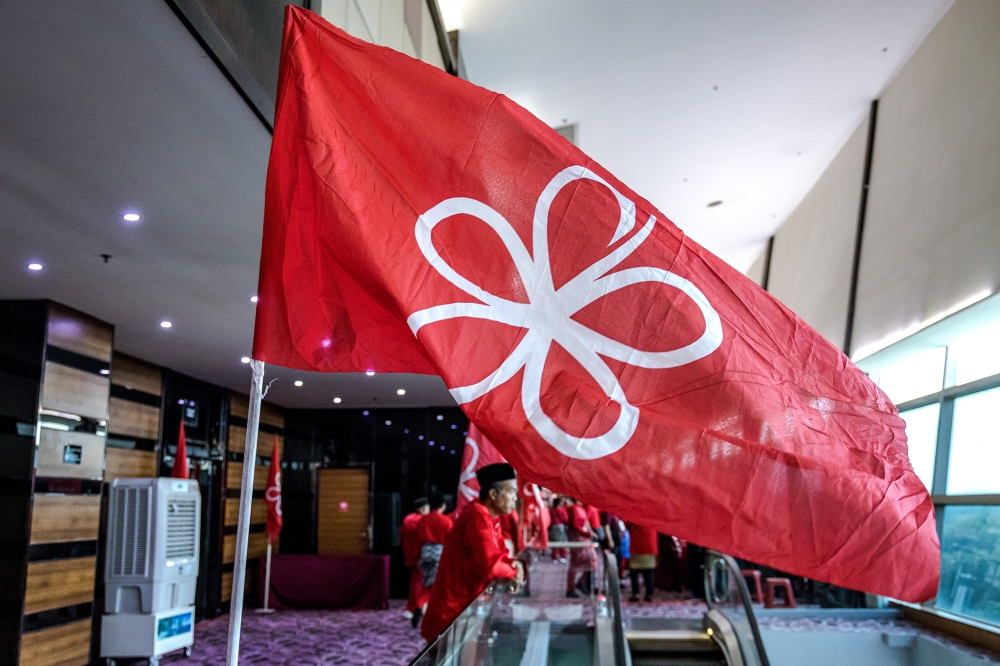
Five developments expose the magnitude of this predicament.
First, the reported delisting of PN represents a potentially devastating institutional failure.
A coalition aspiring to govern Malaysia must demonstrate organisational discipline, constitutional compliance and administrative competence.
If PN cannot maintain its own legal standing, its claim to offer a credible alternative federal government becomes considerably weaker.
The implications extend beyond registration. Political leaders, supporters and sympathisers begin questioning whether the much-advertised Gelombang Biru, or Blue Wave, can ever become an electoral reality.
Gerakan and MIPP cannot simply dismiss such uncertainty as an administrative inconvenience. Their political relevance depends substantially on the credibility of the larger coalition.
MCA, although belonging to Barisan Nasional rather than PN, must likewise recognise that political survival cannot rest on nostalgia or speculative realignments.
Second, the controversy surrounding Tuanku Muhriz of Negeri Sembilan raises questions about constitutional propriety.
Any conduct perceived as derhaka, or disrespect towards the constitutional monarch, carries profound political consequences.
However, allegations of disloyalty must be distinguished from established constitutional wrongdoing.
Malaysia's constitutional monarchy requires political leaders to respect royal institutions while recognising the lawful boundaries separating royal authority, elected government and partisan competition.
Negeri Sembilan possesses a particularly distinctive constitutional and customary heritage. Its royal institution cannot be casually drawn into political manoeuvring.
Parties claiming to defend Malay institutions must demonstrate consistency rather than selective indignation.
Third, the continuing defence of Najib Razak's conditional pardon exposes another contradiction.
Najib's legal circumstances and the controversies surrounding royal clemency cannot be reduced to partisan slogans.
A constitutional pardon is a recognised legal mechanism.
Nevertheless, the exercise of clemency does not automatically erase public concerns about accountability, corruption and institutional integrity.
Political parties must distinguish respect for the royal prerogative from unquestioning political endorsement of a former prime minister.
Gerakan, MIPP and MCA cannot claim to champion institutional reform while avoiding difficult questions about the rule of law.
The same principle must apply to every coalition, including the Unity Government.
Fourth, PN confronts a serious deficit of trust across Malaysia's diverse political geography.
Sabah and Sarawak remain especially sensitive to political arrangements perceived as excessively dominated by Peninsular Malay-Muslim calculations.
Their political priorities include federalism, development, autonomy, religious accommodation and the Malaysia Agreement 1963.
A coalition unable to reassure East Malaysian communities about these fundamentals faces formidable obstacles to national acceptance.
Similar challenges arise in Negeri Sembilan, Selangor and Penang, where multiracial constituencies cannot be treated as incidental to electoral strategy.
Gerakan's multiracial heritage, MIPP's Indian representation and MCA's historical Chinese constituency should theoretically help bridge these divisions. Yet they are not.
Nor can they do anything since delisted PN was formed, ostensibly, as a Malay Unity front albeit a pseudo one. The moment PN is delisted none of these ramparts can do a thing.
Pakatan Harapan is not the best Coalition. Neither is it the worst in the Malaysian political history.
* Phar Kim Beng, PhD, is Professor of Asean Studies at the International Islamic University of Malaysia and Director of the Institute of International and Asean Studies (IINTAS).
** This is the personal opinion of the writer or publication and does not necessarily represent the views of Malay Mail.


