


OCTOBER 16 — The transboundary haze crisis has once again disrupted children’s lives, triggering school closures across several parts of Malaysia.
For two weeks, many children have awakened to grey skies and closed school gates as deteriorating air quality interrupts learning and daily routines.
Under the Ministry of Education’s latest directives on October 14, schools must close when the Air Pollutant Index (API) exceeds 200, while outdoor activities must be suspended when readings reach 100 or above.
Conditions remain volatile, with Johor, Kuala Lumpur, Selangor, Melaka, Pahang, Negeri Sembilan and Sarawak experiencing, or having recently experienced, school closures.
When schools close, support must follow the child
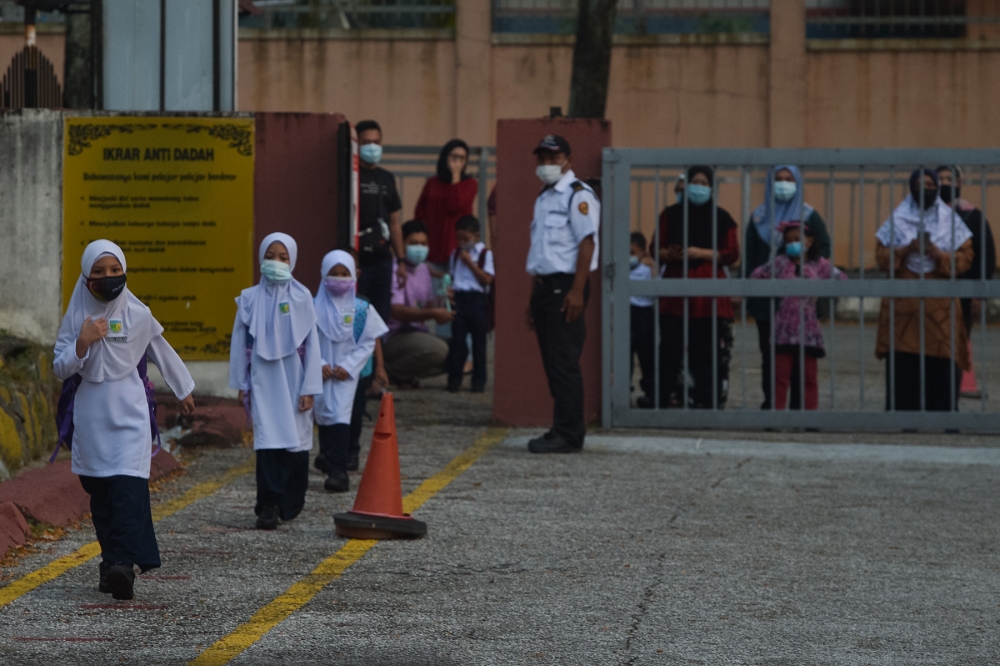
When haze forces schools to close, the decision is rightly made to protect children’s health. But closing the school gate does not make the haze disappear, or guarantee that every child is safe, cared for, and able to learn at home.
Schools are places for learning and development. For many children, they also provide routine, trusted adults, peer connection, and, in some cases, meals and other support. When schools close, families may have to rearrange work and childcare at short notice, while children lose parts of the support, they rely on during the school day.
Home-based teaching and learning can help maintain continuity, but children’s circumstances vary. Some have a device, reliable internet, and an adult who can support them; others may not. Crowded or poorly ventilated homes can also make it harder for some children to find a comfortable place to learn or avoid exposure.
Schools may close for everyone, but some children lose far more than classroom time. A child who cannot access online learning may fall behind. A child who relies on school for meals or a safe, predictable routine may need other support while the school is closed. Longer interruptions can also affect children’s motivation, wellbeing, and connection with teachers and classmates.
School closures must remain temporary and guided by health advice. They should be accompanied by clear information for families, flexible learning options that account for different levels of access, and practical support for children who may otherwise lose essential connections.
The aim is not only to close schools, when necessary, but to make sure every child remains safe, supported, and connected until classrooms can reopen.
Tiny lungs bear a heavy burden
Children are not small adults. They breathe faster, take in more air relative to their body weight, and have lungs, brains and immune systems that are still developing. Fine particles can travel deep into the lungs and bloodstream, with damage that may begin in the womb and last a lifetime.
Unicef estimates that about 9 in 10 of Malaysia’s 9 million children are exposed to harmful air pollution (PM2.5). In Unicef Malaysia’s 2025 National Youth Climate Change Survey of 1,420 young people aged 15-30, about half of the youth respondents said they had experienced haze in the last 12 months, making it the most commonly reported environmental hazard.
Clean air is not a luxury. It is inseparable from children’s rights to life, health and education. The Convention on the Rights of the Child requires governments to protect children’s rights. General Comment No. 26 explains how these obligations apply to environmental harm, including air pollution.
If a child’s right to breathe clean air depends on the season, it is not yet a right in practice.
Urgent action is needed
Haze can no longer be treated as an occasional seasonal inconvenience. Hotter and drier conditions are increasing the risk of forest and peatland fires, while Malaysia’s everyday air quality already falls short of World Health Organisation guidelines in many places. The response must protect children during an episode and reduce the pollution that causes it.
Unicef works globally to make clean air a child-health priority: strengthening evidence and child-focused monitoring, supporting early warning systems, helping schools and health services prepare, and bringing children’s voices into climate and environmental policy.
In Malaysia, Unicef has been supporting air-quality monitoring in and around schools and equipping schoolchildren with practical information to understand air pollution, reduce exposure and help protect their health. A key priority includes connecting immediate protection during haze episodes with long-term action across health, education, climate and urban planning.
Four actions are needed now:
1. Help families prepare. Give clear notice of closures and practical advice on reducing exposure, managing asthma and allergies, and recognizing when a child needs medical help.
2. Keep every child learning. Online lessons alone are not enough. Schools need offline materials, self-learning kits, and other options for children without devices or reliable internet.
3. Keep health and social support within reach. Clinics, schools, and employers should work together so children can access medicine and care and are not left alone when parents must work.
4. Prepare before the next haze episode. Every school and clinic needs a haze preparedness plan linked to official air-quality information and health guidance, with clear responsibilities for communicating with families, protecting children and maintaining essential support. Low-cost air-quality monitors can help schools track local conditions and act on timely evidence. In haze hotspots, air purifiers in schools can also be considered as part of a targeted strategy, recognising the costs and the need to prioritise schools and children facing the greatest exposure.
Emergency measures alone will not end the cycle
Malaysia and our neighbours need shared air-quality data, earlier warnings and coordinated action that protects children as well as fights fires. Governments and businesses must prevent forest and peatland fires at source, strengthen accountability across supply chains, and support communities whose livelihoods depend on the land.
Children and young people must also have a place to shape these solutions. They are already telling us what they experience; policy makers should listen to them.
Children cannot stop the fires, clear the air, or decide when schools will reopen. They depend on adults to act, and they have a right to be heard in those decisions.
Every child has the right to breathe clean air. Until that right is a reality, we cannot call another haze season something we to have simply “get through”.
* Sanja Saranovic is deputy representative of Unicef Malaysia.
** This is the personal opinion of the writer or publication and does not necessarily represent the views of Malay Mail.


