


OCTOBER 10 — South-east Asia has lived with transboundary haze for far too long.
What was once regarded as an occasional environmental disturbance has become a recurring threat to public health, economic productivity, regional diplomacy and, increasingly, the credibility of Asean itself.
The time has come for Asean to treat haze not merely as an environmental problem but as a matter of regional security requiring sheer haste.
The distinction is important. Environmental problems are often approached through lengthy consultations, technical assessments and carefully negotiated agreements.
Security threats, however, demand preparedness, rapid responses and sustained political attention.
Haze belongs increasingly to the latter category.
From Indonesia and Malaysia to Singapore, Brunei and parts of mainland South-east Asia, the consequences of uncontrolled forest and peatland fires do not respect national boundaries.
Neither do the atmospheric conditions that carry smoke and dangerous particulate matter across thousands of kilometres.
A fire originating in one country can compromise the health, economic activities and educational institutions of several others.
Asean cannot afford to normalise this phenomenon.
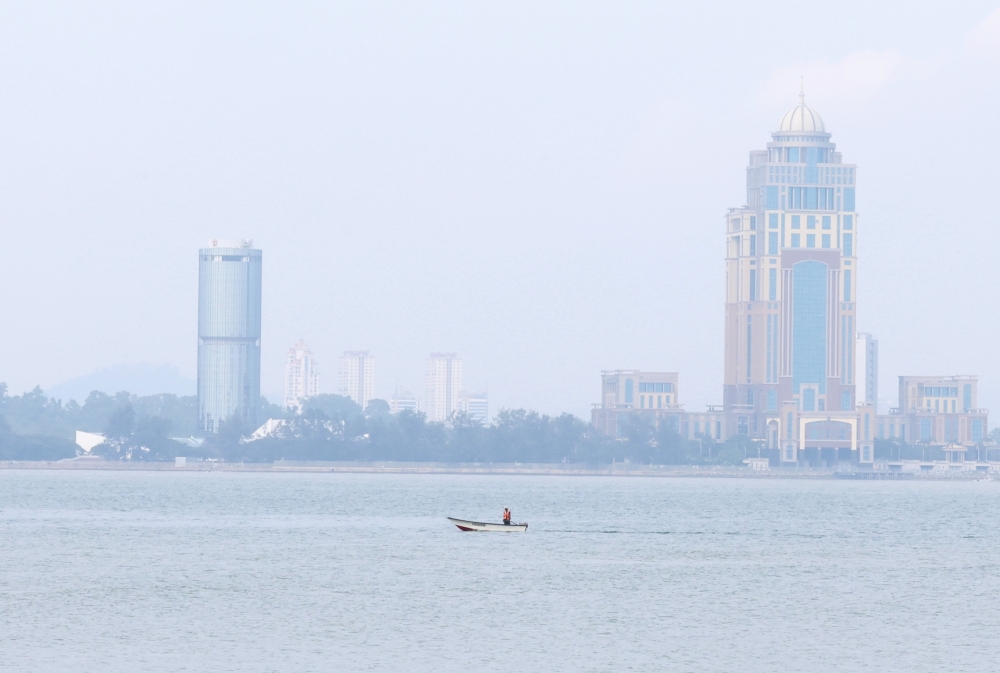
Indeed, the very recurrence of haze exposes a structural weakness in regional governance.
Asean has developed considerable diplomatic sophistication in managing relations among major powers.
Yet its capacity to prevent environmental emergencies within its own geographical boundaries remains uneven.
This contradiction deserves serious attention.
The Asean Agreement on Transboundary Haze Pollution, signed in 2002 and subsequently ratified by all ten original Asean members, was supposed to establish a framework for cooperation in monitoring, prevention and mitigation.
Its existence is significant.
It demonstrates that Asean member states recognize the collective nature of the threat.
Yet recognition is not the same as enforcement.
Nor can institutional cooperation automatically overcome the economic incentives that continue to encourage unsustainable land clearing.
The problem is compounded by the extensive presence of peatlands, particularly in parts of maritime South-east Asia.
When peatlands are drained and exposed to prolonged dry conditions, they become exceptionally vulnerable to fires.
Once ignited, underground combustion can persist for extended periods, making extinguishment difficult and expensive.
The resulting smoke contains fine particulate matter, including PM2.5, which can penetrate deep into the lungs and contribute to serious cardiovascular and respiratory complications.
Children, elderly citizens, outdoor workers and individuals with existing medical vulnerabilities are especially exposed.
This makes haze a matter of human security in the fullest sense.
It is also an economic issue.
When air quality deteriorates, schools may close, flights can be disrupted, tourism suffers and businesses experience declining productivity. Agricultural activities become more difficult, while public healthcare systems face additional pressure.
The costs are not always immediately visible in national budgets. Nevertheless, they accumulate through lost working hours, medical expenditure, interrupted commercial activities and diminished public confidence.
For economies seeking to strengthen their competitiveness amid global uncertainty, these are unnecessary burdens.
South-east Asia already faces substantial geopolitical and economic pressures. Disruptions in global energy supplies, uncertainties surrounding international trade, intensifying technological competition and increasingly unpredictable climatic conditions are testing the resilience of the region.
Recurring haze adds another layer of vulnerability.
More importantly, climate change threatens to intensify the underlying conditions that make vegetation and peatland fires difficult to control.
Periods of drought, unusually high temperatures and changing rainfall patterns can create circumstances in which localized fires rapidly develop into regional emergencies.
Asean must therefore move beyond reacting to haze after pollution readings have already reached dangerous levels.
Prevention must become the principal strategic objective.
This requires better satellite surveillance, stronger enforcement against illegal burning, sustained peatland restoration and more effective cooperation among national and provincial authorities.
It also demands greater accountability from agricultural and plantation enterprises whose land management practices may contribute to fire risks.
However, the issue cannot be resolved through punitive measures alone.
Smallholders frequently operate under economic constraints that make inexpensive land-clearing methods attractive. Without accessible alternatives, financing and technical assistance, prohibitions may achieve only limited results.
Asean must therefore combine enforcement with economic incentives that encourage sustainable agricultural practices.
Malaysia, Indonesia and Singapore have particularly important roles in this endeavour.
Their geographical proximity, economic interdependence and historical exposure to transboundary haze give them strong reasons to deepen practical cooperation.
Indonesia’s efforts to improve fire prevention and peatland management should be supported through sustained technical collaboration rather than reduced to occasional diplomatic criticism.
Malaysia, meanwhile, must strengthen its own preventive capabilities while ensuring that domestic land management practices meet the standards it expects of neighbouring countries.
Singapore can contribute through environmental monitoring technologies, financing mechanisms and research partnerships.
The wider Asean membership must also participate, especially given the recurring seasonal burning and air pollution challenges affecting mainland South-east Asia.
The objective should be a regional framework capable of identifying emerging fire risks before they escalate into widespread atmospheric pollution.
This is where Asean’s diplomatic culture must evolve.
The Asean Way has traditionally emphasized consultation, consensus and non-interference.
These principles have helped preserve relations among countries with different political systems, economic structures and strategic interests.
Nevertheless, consensus should never become an excuse for administrative inertia.
Neither should respect for sovereignty prevent governments from exchanging information rapidly when public health is at stake.
Asean’s centrality cannot be measured exclusively by the number of summits it convenes or the major powers it engages.
Its credibility must also be judged by its ability to protect the everyday welfare of approximately 700 million people across the region.
A regional organisation that can negotiate with Washington, Beijing, Tokyo and New Delhi should also be capable of coordinating decisive action against preventable environmental emergencies.
Indeed, haze presents an opportunity to demonstrate what may be described as Asean’s circumscribed power: the ability to produce meaningful collective outcomes despite institutional limitations and differences in national priorities.
This power need not depend on supranational enforcement mechanisms comparable to those of the European Union.
It can emerge through practical coordination, transparent reporting, mutual assistance and measurable commitments.
Asean should establish clearer regional response thresholds, improve real-time information sharing and ensure that emergency firefighting assistance can be mobilized without unnecessary bureaucratic delays.
The private sector must also be brought into this framework.
Financial institutions, commodity traders and plantation companies should be encouraged to make environmental compliance an essential condition of responsible investment.
Ultimately, transboundary haze is not simply smoke drifting across national borders.
It represents the accumulated consequences of weak enforcement, ecological degradation, economic short-termism and insufficient regional coordination.
The problem is neither new nor scientifically mysterious. Much of what needs to be done is already understood.
What remains inadequate is the consistency and urgency of implementation.
Asean must recognise that environmental security is inseparable from economic resilience, public health and regional stability.
The longer haze is allowed to recur without sufficiently effective preventive action, the greater the reputational damage to South-east Asia as a region committed to sustainable development.
Malaysia, as a leading advocate of Asean centrality and regional cooperation, should continue pressing for a more operational and results-oriented approach.
Diplomatic declarations have their place. But clean air cannot be secured through declarations alone.
South-east Asia needs early intervention, credible enforcement, sustained ecological restoration and collective political determination.
Haze must be handled with sheer haste because the health of millions, the productivity of regional economies and the credibility of Asean itself cannot remain hostage to another season of preventable fires.
The region has discussed the problem for more than two decades.
It is time for Asean to demonstrate that its capacity for collective action can move as quickly as the smoke that crosses its borders.
Sharpen my Asean policy demands
Reduce repetition and tighten my prose
Make my Malaysia role more concrete
* Phar Kim Beng is professor of Asean Studies, and director at the Institute of International and Asean Studies, International Islamic University Malaysia.
** This is the personal opinion of the writer or publication and does not necessarily represent the views of Malay Mail.


