
















AUG 4 — What should an examination really measure? Is its purpose to determine how much information students can memorise, or to evaluate how effectively they can apply what they know when faced with real-world problems?
For decades, closed-book examinations have been regarded as the gold standard of academic assessment. Success often depended on a student’s ability to recall facts accurately under time pressure.
However, as higher education continues to evolve, many universities are beginning to reconsider whether memorisation alone is still the best indicator of professional competence. This has led to growing interest in the use of open-book examinations (OBTs), including in dental education.
The introduction of OBTs has inevitably generated debate. Some assume that allowing students to refer to books or approved materials automatically makes examinations easier.
In reality, that assumption misunderstands what a well-designed OBT is intended to assess.
A good open-book examination is not designed to test whether students can find information. It is designed to evaluate whether they can interpret information, connect different concepts, analyse complex situations, and make sound decisions based on scientific evidence.
In other words, it shifts the focus from remembering knowledge to using knowledge.
This distinction is particularly important in dentistry. Clinical practice rarely depends on memory alone.
Every patient presents a unique combination of medical history, clinical findings, personal circumstances, and treatment expectations.
Dentists routinely consult clinical guidelines, review current evidence, and discuss challenging cases with colleagues before deciding on the most appropriate course of treatment.
Professional competence therefore lies not in knowing everything, but in knowing how to use available knowledge responsibly.
This is precisely where OBT reflects authentic professional practice.
Consider a dental student presented with a patient who has uncontrolled diabetes, missing teeth, and is receiving anticoagulant therapy.
Such a case cannot be managed simply by recalling isolated facts from a textbook. The student must evaluate medical risks, understand the interaction between systemic disease and dental treatment, compare different prosthodontic options, and justify every recommendation using current evidence.
These are the forms of clinical reasoning that define competent practitioners, and they are exactly the kinds of abilities that well-designed OBTs are capable of assessing.
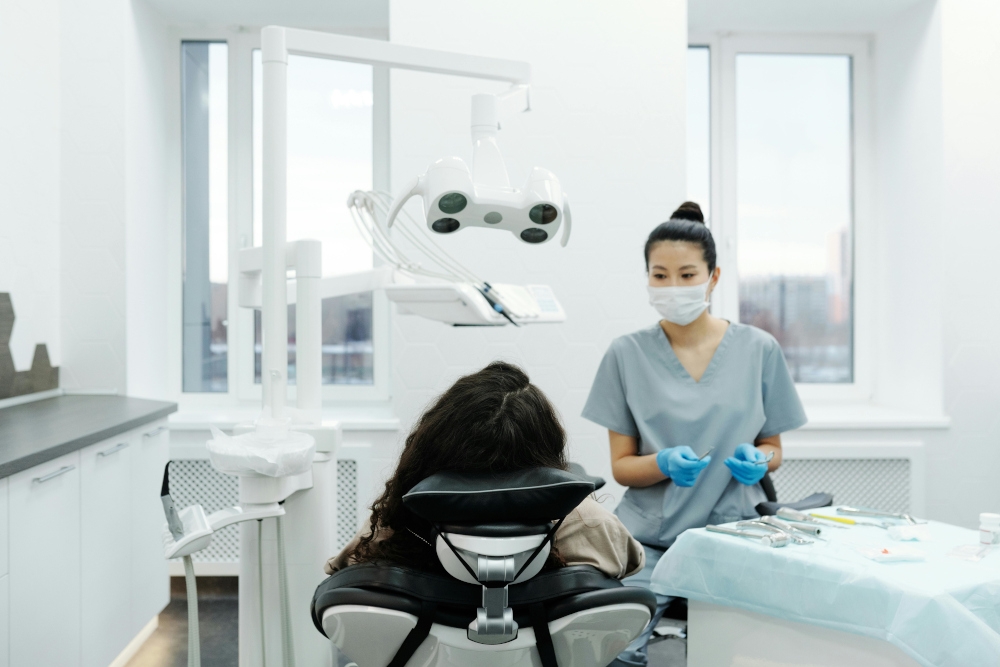
The quality of the examination, however, is far more important than whether it is open-book or closed-book.
If questions merely ask students to define terms or list facts, the assessment becomes little more than an exercise in locating information.
An effective OBT requires carefully constructed questions that demand application, problem-solving, critical analysis, and professional judgement.
The objective is no longer to ask What do you know? but rather How do you use what you know?
This does not mean that memorisation has become irrelevant. Certain aspects of dental education still require immediate recall because hesitation can have serious consequences.
Dentists cannot pause during a medical emergency to search for the correct drug dosage or infection control protocol.
Fundamental knowledge in anatomy, pharmacology, emergency management, and patient safety must become second nature through repeated learning and practice.
Similarly, clinical competence cannot be evaluated solely through written examinations.
Practical assessments such as Objective Structured Clinical Examinations (OSCEs), simulation exercises, and direct patient care remain essential because they measure technical skills, communication, professionalism, and clinical judgement in ways that no written assessment can fully capture.
Rather than viewing open-book and closed-book examinations as competing approaches, it is more productive to recognise that they serve different educational purposes.
Closed-book assessments remain valuable for evaluating foundational knowledge that must be readily available in practice.
Open-book assessments, on the other hand, provide opportunities to evaluate higher-order thinking, evidence-based decision-making, and the ability to solve complex clinical problems.
Used together, they offer a more comprehensive picture of a student’s readiness for professional practice.
The emergence of artificial intelligence has made this discussion even more relevant.
Increasingly, healthcare professionals have access to AI-powered systems that can suggest diagnoses, summarise research findings, or recommend treatment options within seconds.
Yet these technologies do not diminish the importance of professional judgement. If anything, they make it even more essential.
Future dentists must be able to evaluate the quality of information generated by AI, recognise its limitations, and determine whether its recommendations are appropriate for the individual patient sitting in front of them.
The challenge is no longer access to information. It is the ability to judge information wisely.
Ultimately, the debate over OBT is not really about whether students should be allowed to open a textbook during an examination. It is about what kind of professionals we hope our educational system will produce.
Dental education is not intended to produce graduates who can simply recall facts under examination conditions.
Its purpose is to prepare clinicians who can integrate knowledge, evaluate evidence, exercise sound judgement, and make safe decisions when the answers are rarely presented in neat multiple-choice options.
If an assessment method helps cultivate those abilities, then the question is no longer whether it is open-book or closed-book.
The more important question is whether it prepares future dentists for the realities of clinical practice.
* Dr Zubaidah Zanul Abidin and Dr Siti Fauzza Ahmad are from the Department of Restorative Dentistry, Faculty of Dentistry, Universiti Malaya and may be reached at [email protected]
** This is the personal opinion of the writer or publication and does not necessarily represent the views of Malay Mail.