


NOVEMBER 5—South Korea stands at a historic crossroads. A nation once admired for its democratic transformation and technological dynamism is now confronting the darkest shadows of its political past.
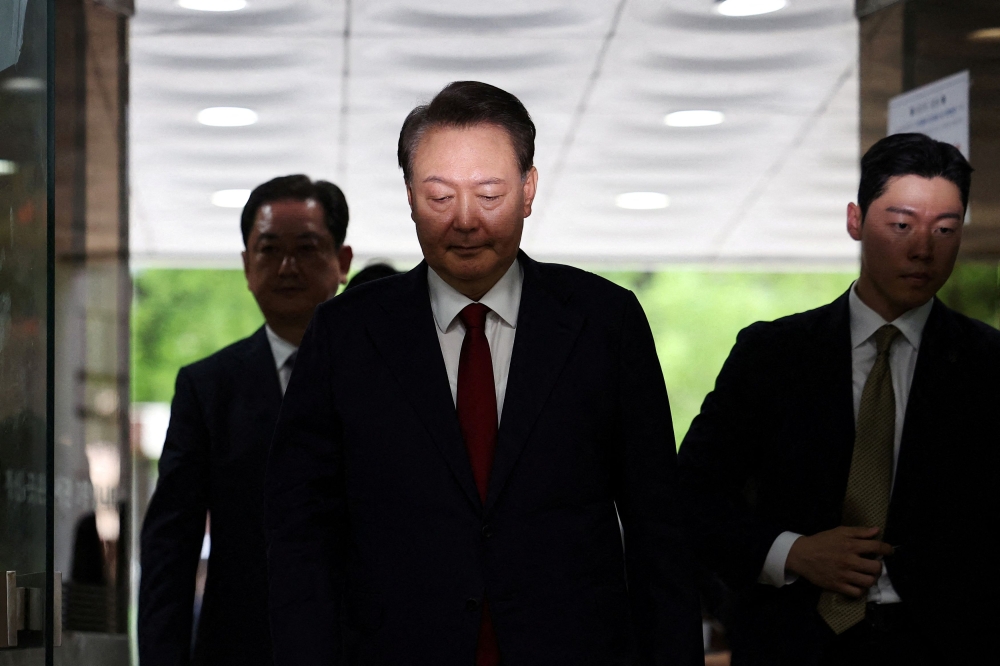
The shocking testimony in the trial of former President Yoon Suk-yeol—that he allegedly ordered the capture of political opponents so that he could “shoot and kill them all” himself—has rocked the republic to its core.
Yet, paradoxically, these chilling revelations have reignited something profoundly democratic: the insistence that no one, not even a president, is above the Constitution.
When institutions push back
On November 4, 2025, a former special forces commander’s testimony stunned the Seoul courtroom and reverberated across Asia. The allegations were grim, but the implications were transformative. For all its turbulence, South Korea’s democracy has demonstrated that the rule of law still reigns.
The impeachment of Yoon Suk-yeol, upheld by the Constitutional Court earlier this year, was not simply a political maneuver; it was an affirmation of democratic sovereignty.
For a country that once endured military rule and silenced dissent, the current proceedings symbolize an extraordinary reversal—from martial law to moral law.
Where once soldiers held the streets, today judges hold power to account. This is not the decay of democracy; it is its purification.
The strength beneath the scandal
It is tempting to read South Korea’s crisis as proof of democratic fragility.
Yet it reveals the opposite: a robust political culture where institutions, civil society, and the press refuse to be subdued.
The public’s outrage, the media’s relentless scrutiny, and the judiciary’s independence together ensure that the instruments of accountability are sharper than ever.
This civic vigilance is the hallmark of a mature democracy. The same society that protested Park Geun-hye’s corruption and defended its
Constitution against authoritarian nostalgia is now pushing back again. South Korea is not descending into chaos; it is rising through self-correction.
Lessons for Asean and Malaysia’s 2025 chairmanship
For Asean—and especially for Philippines as Chair of Asean in 2026—South Korea’s democratic reckoning offers urgent lessons for republic. It shows that governance, transparency, and moral courage are as essential to stability as trade and technology.
Malaysia, under Prime Minister Anwar Ibrahim’s leadership, has positioned this chairmanship around “Sustainability and Innovation” in 2025.
Yet political sustainability cannot thrive without moral sustainability—the courage to confront wrongdoing within systems of power.
Asean’s consensus model has often been criticized for caution, even complacency. But South Korea’s example reminds us that consensus is only virtuous when paired with conscience.
A regional community that aspires to credibility on the global stage must value the integrity of institutions as much as economic integration.
The Korean crisis, therefore, is not a cautionary tale alone. It is an invitation to Asean to strengthen its legal and moral frameworks—to ensure that leaders remain servants of the people, not masters of the state.
The Asian century’s moral test
Across the Indo-Pacific, democracy is under strain. Populist nationalism, military interventions, and elite impunity are testing the region’s resilience. Yet in Seoul, the system fights back.
The trial of Yoon Suk-yeol is not a sign of democratic collapse but of democratic consciousness—the belief that truth, however painful, is better than silence.
If South Korea succeeds in holding its former president accountable, it will reaffirm the region’s faith in moral law. It will prove that the Asian Century need not be defined by authoritarian efficiency, but by ethical governance rooted in the rule of law.
From Seoul to Kuala Lumpur
As Malaysia leads Asean through one of its most complex geopolitical years in 2025—balancing US–China tensions, managing economic shocks, and promoting the Asean Digital and Green Economy —from next January 2026 onwards, as the new Group Chair Philippines can take inspiration from Seoul’s experience. Stiffen up the backbone of Asean on the importance of rule of law and democracy.
The essence of leadership lies not in control, but in ensuring wide scale good governance and accountability. Invariably from Asean Secretariat to East Asian Summit.
South Korea’s democratic reckoning is thus more than a national story; it is a regional mirror. It reminds every Asean leader that legitimacy flows from transparency, and that democracy, like any great institution, grows stronger not through silence, but through scrutiny.
In the end, South Korea’s crisis may well become its finest hour—and a lesson to all of Asia that true strength lies in the courage to face one’s own truth. Asean should take heed of Yoon’s legal debacle and. Korea’s painful wrestle with rule of law, which the people nonetheless seem to be winning.
* Phar Kim Beng is professor of Asean Studies and Director, Institute of International and Asean Studies (IINTAS), IIUM.
** This is the personal opinion of the writer or publication and does not necessarily represent the views of Malay Mail.


