


NOVEMBER 4 — China is ahead — and the rest of the world, including Asean, is left in a trail of smoke. That phrase, once rhetorical, is now statistical reality.
From industrial output to artificial intelligence, from energy generation to human capital, China has built an ecosystem of dominance while others are still sketching their blueprints.
The message for Asean, especially during Malaysia’s 2025 Chairmanship, was clear: if Asean does not bridge our power and education gaps, we will be digitised by others rather than digitalise ourselves.
China’s architecture of advantage
Beijing’s ascent is not accidental. Over four decades, it has fused state direction with market dynamism to produce what might be called planned innovation. The Made in China 2025 initiative laid the foundation for supremacy in robotics, semiconductors, and renewable energy.
China now commands over 70 per cent of global rare-earth refining capacity, 80 per cent of solar-panel production, and nearly two-thirds of electric-vehicle batteries.
Its strength lies in vertical integration — from raw materials to final assembly. Even the West’s re-shoring efforts cannot easily duplicate the supply-chain density China built across its coastal provinces. The United States and Europe can build factories, but they still depend on Chinese components.
That is why China can produce 4.2 million STEM graduates every year, while the entire South-east Asian region, home to 700 million people — half of China’s population — produces only 750,000.
Talent, scale, and energy converge to sustain China’s primacy.
Energy: The first gap Asean must close
As Gita Wirjawan, Indonesia’s former trade minister, recently observed, Asean must reach 6,000 kilowatts of electricity per capita to power the AI revolution. Today, only Singapore meets that threshold with 10,000 kilowatts per capita, on par with China and the United States. Malaysia, at roughly 4,000, leads continental Asean but still falls short.
Artificial intelligence is not merely code; it is current. Every large-language model and data centre consumes vast megawatts. Without reliable energy, even the best-trained programmers cannot deploy their work.
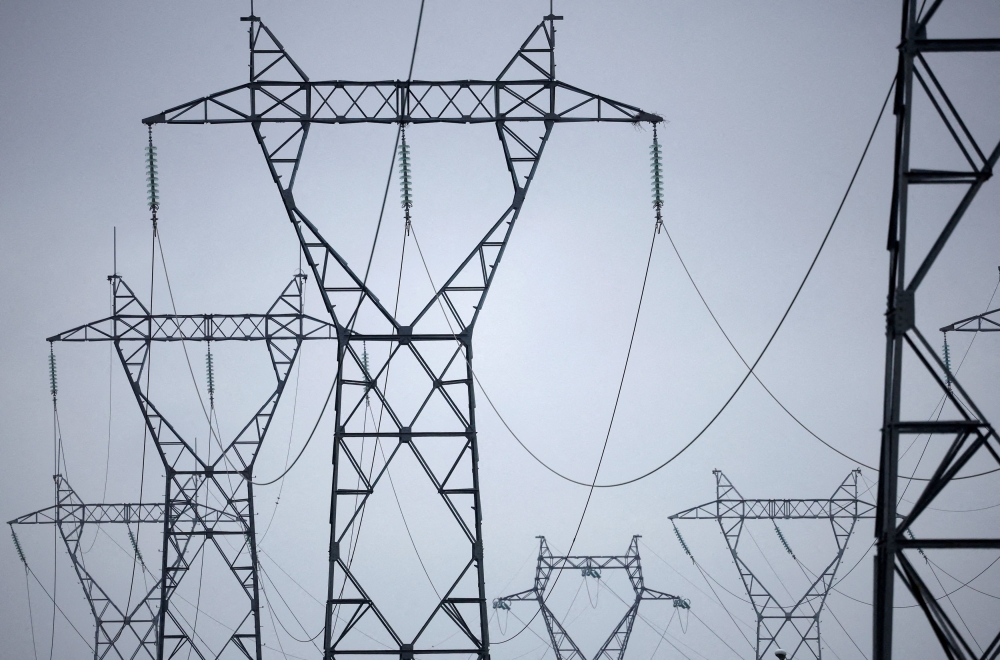
Yet power grids across Asean remain patchy, with transmission less than perfect.
Asean’s 750,000 STEM graduates — fewer than one-fifth China’s number — cannot sustain a comparable innovation base.
This imbalance will widen unless education ministries treat STEM as strategic infrastructure. The Asean Digital Economy Framework Agreement (Defa) must include an Asean AI Education Compact — a regional effort to double STEM enrolment within five years and allow cross-border academic mobility through an Asean STEM Mobility Pact.
Technical and Vocational Education and Training (TVET) must be rebranded as High-Tech Vocational Pathways — producing data-centre operators, renewable-energy technicians, and robotics engineers. If we cannot multiply coders, we must at least create the conditions for them to thrive regionally.
Malaysia’s strategic middle path
As Asean Chair in 2025, Malaysia stands at the nexus of this transformation. The Kuala Lumpur Vision 2045 outlines sustainability and innovation as twin pillars, while the National Semiconductor Strategy (NSS) positions Malaysia within global chip supply chains.
With 4,000 kilowatts per capita — double Asean’s average — Malaysia is best placed to spearhead regional energy and digital integration. The KL Innovation Corridor, linking Penang’s semiconductor hub with Kuala Lumpur’s AI clusters and Johor’s green data-centre corridor, can become Asean’s prototype of an energy-intelligent economy.
Prime Minister Anwar Ibrahim’s diplomacy has already widened access: zero-tariff privileges for Malaysian exports to the US, renewed investment flows from China, and Asean-GCC cooperation in green technology. But the next stage is capacity — energy to power AI, and education to sustain it.
Lessons from China’s strategic depth
China’s advantage stems from coherence. Its dual-circulation policy secures domestic demand while anchoring global influence through the Belt and Road Initiative (BRI) and the Digital Silk Road. Every infrastructure project doubles as an education pipeline; every province has an AI plan.
Asean, by contrast, tends to separate economics from education and energy from innovation. To catch up, it must learn not to copy China’s authoritarianism but to emulate its long-termism.
Beijing planned decades ahead; Asean plans by summits. If Malaysia’s 2025 Chairmanship can extend its current policy horizon from five to twenty years, the region can finally align its collective growth with its demographic dividend.
The new equation: Power + Talent = Autonomy
Energy without human capital breeds dependence; human capital without energy breeds frustration to be autonomous, Asean must develop both. The path forward involves:
1. Regional Power Integration — Finalise interconnection under the Asean Power Grid and liberalise cross-border energy trading.
2. STEM Acceleration— Double graduate output through joint universities, scholarships, and industry-academia partnerships I’m on
3. AI Infrastructure Standards — Harmonise data-centre regulations and adopt a unified Green Data Centre Protocol to align digital expansion with carbon-neutral goals.
These are not slogans but survival strategies in a world where artificial intelligence is becoming the new currency of power.
Clearing the smoke
The image of the world trailing China in smoke is more than a metaphor — it is an audit. It reflects lost years of under-investment, short-term politics, and fragmented planning. Yet it is not irreversible.
The United States retains its capacity for reinvention; Europe still shapes regulatory norms; Asean holds the world’s most youthful population poised for productivity — if empowered.
The task of Malaysia’s 2025 Chairmanship is therefore historic: to electrify Asean’s economies and enlighten its people simultaneously. To bridge kilowatts and knowledge. To prove that regionalism is not a relic but a renewable force.
If Asean can achieve 6,000 kilowatts per capita and one million STEM graduates annually, it will not only close the gap with China — it will redefine what development means in the AI century.
Otherwise, we will remain passengers on the global express — watching China’s train disappear ahead, coughing in the smoke of someone else’s progress.
* Phar Kim Beng is professor of Asean Studies and Director, Institute of International and Asean Studies (IINTAS), IIUM.
** This is the personal opinion of the writer or publication and does not necessarily represent the views of Malay Mail.


