


AUGUST 24 — Pivoting the Malaysia economy intended in the MEF requires more clarity in understanding the ultimate outcomes of MEF. If we are to take a measure of GDP as the indicator of a country’s wealth, the countries are that are in the 28th to 32nd position in 2023 in terms of GDP size (according to the IMF) are Norway, Israel, Singapore, Austria and Nigeria. Malaysia is currently in the 38th position. However, if the MEF’s to aim is to reach the 30th position in terms of GDP per capita, Japan, Brunei, Taiwan, Cyprus and Kuwait are in the 28th to 32nd ranking in terms of GDP per capita.
Brunei, Kuwait, Norway, Nigeria are all endowed with considerable natural resource i.e., oil. Norway has a more diversified economy. Singapore, Taiwan, Japan and Israel are similar in their reliance on technology and services. Austria has a highly diversified and industrialised economy. Cyprus relies on petroleum and ship construction as its biggest sources of income. If we are to think in terms of benchmarking, which of these countries should be the reference point for Malaysia?
Alternatively, Malaysia should look at the rapid growth of countries like Romania. Romania was a poor country, its GDP per capita was only about half of Malaysia’s, when the Soviet Union collapsed in 1991. It has since overtaken Malaysia and is now considered a high-income economy. Part of its success was due to its understanding of the competitive environment it was in. Because of its proximity to Germany, Romania developed a niche by positioning itself for subcontracting work for German software companies. Besides developing strong software programmes in its universities, Romanian students are also taught German. This turned Romania from an underdog into a major player in the EU software industry. Romania understood how to think, plan and execute strategically.
Middle-class entrepreneurs and future growth
It is important to also balance the focus on start-ups mentioned in the MEF with initiatives to also help existing SMEs, especially the medium enterprises, grow further. Many of these enterprises have a track record, had survived the initial shake down of the first two years after establishment where failure rate is highest, and has some basic technological capabilities. What is needed is to boost their technological and business sophistication.
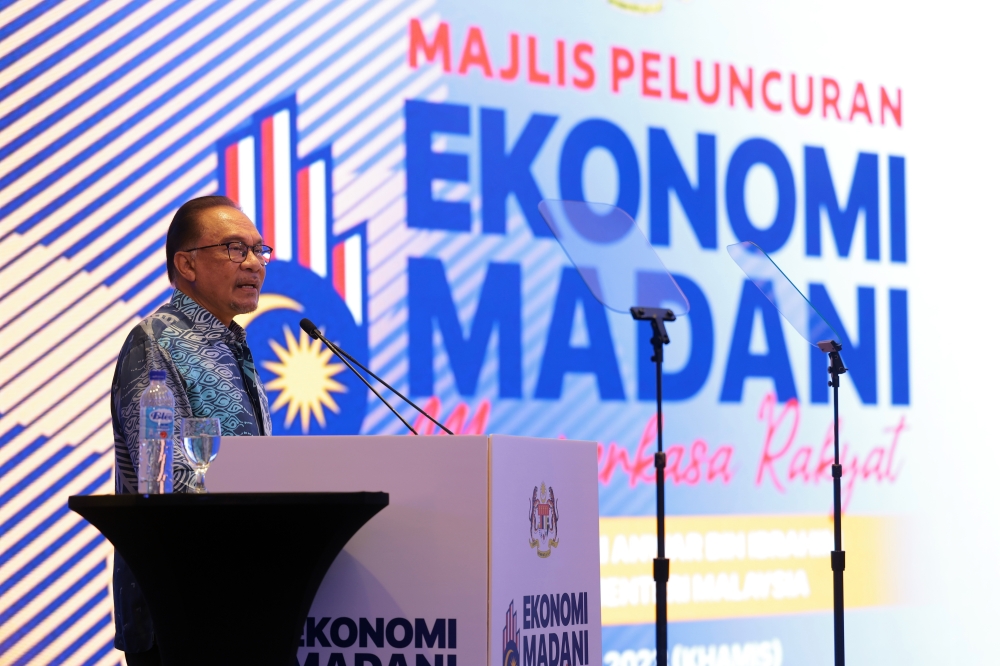
The MEF discussed various steps to help pivot Malaysia’s economy from the current plateau. It identified initiatives to be taken to reboot the manufacturing sector and support the development of start-up companies. Among other things, it discusses the pathway for start-ups to progress to SME and finally become public listed companies. This pathway depicts the growth journey of start-ups in terms of size and access to capital. However, it does not describe how the business and technological sophistication of these businesses should evolve.
Another way to conceptualise the pathway is to look at the value migration of manufacturing companies from serving as Original Equipment Manufacturers (OEM) to Original Design Manufacturers (ODM) and finally to become Original Brand Manufacturers (OBM). OEMs produce products designed by others, usually as contract manufacturers. ODM are companies that develop their own design capabilities to design and produce products for customers. OBM are companies that design, produce and market products under their own brands.
The OEM-ODM-OBM value migration marks a growth that involves higher value-add and becoming more knowledge-intensive. The transition from OEM to ODM involves more investment in technical capabilities. However, the transition from ODM to OBM involves also developing business capabilities, especially in business strategy, marketing and sales. The kind of support programmes and competencies mix needed by companies growing through these stages are different. Success in doing this will help enhance the competitiveness of SMEs and grow further the middle-class entrepreneurs in Malaysia. Malaysia already has many companies operating as OEM. This OEM-ODM-OBM migration will tap into its current strength and help create more economic value as well higher income jobs.
One area receiving limited attention in the MEF speech in the service sector. The service sector has overtaken the manufacturing sector in terms of contribution to Malaysia’s GDP. Yet, the Khazanah Research Institute found that a high proportion of the jobs created in the service sector are low paying traditional service jobs. There are a number of potential areas for the service sector to grow. Among the key ones includes financial services, animation, cybersecurity, medical tourism, industrial design and development of artificial intelligence. Capabilities in cybersecurity is needed for economic value creation as well as to address national security concerns. All these areas are knowledge-intensive and will require innovation to become competitive and sustainable. For instance, Malaysia has made significant strides in medical tourism and this can be grown further. It needs to shift from a focus on marketing and invest more in capacity building to maintain its strong position in this industry and create competitive distance with other countries that are also competing in the same space.
Innovation and technology strategy
It can be argued that innovation is another performance driver of the MEF outcomes. The MEF recognises the importance of R&D and commits to increasing R&D allocation to 3.5 per cent of the GDP. This is a step in the right direction. However, spurring R&D requires more than just more funding. Malaysia needs to get its priorities right, develop focus areas and strengthen its innovation system. The lack of strategic focus and accumulation of distinct strengths is reflected in Malaysia’s patent density trend over the last 20 years.
A mapping of patents registered in Malaysia shows that Malaysia used to have around 10 areas of patent density. Patent density areas indicate fields of technology development where there is sustained accumulation of patents. However, by 2018 this has reduced to only one i.e., in palm oil related patents. This indicates that while a lot of research activities have been going on there is no strategic focus and does not lead to an accumulation of distinct strengths.
What is needed is a technology strategy that provides more focus and helps Malaysia to build distinct strengths and competitive advantage. There is considerable fragmentation in the way R&D funds are managed in Malaysia. The various entities involved in managing research funds all have their own set of priority areas. There is limited convergence between all these priority areas. This has to be resolved to ensure the extra funds given for R&D has a strategic impact.
In addition, more has to be done to strengthen the quadruple helix nexus (collaboration between government, industry, universities and NGOs) to bring more R&D output to commercialisation. Many countries also experience difficulties in building this nexus. However, the ability to do this well can accelerate innovation and become a source of inimitable competitive advantage. Malaysia also has technology accelerator programmes to support innovation among start-up companies. Their role in this nexus should be strengthened further.
Some universities, especially the research universities, have done a better job in commercialising their research. Besides doing more research, among the distinct strength of these universities is the presence of competently run Technology Transfer Offices (TTO). Unfortunately, those universities that are less effective in technology transfer tend to assign administrative staff who are not adequately trained to run their TTOs. There is also a lot to learn from the creative ways Japan has used TTOs to provide the linkage between universities and industry.
One area deserving more attention is R&D to support the National Energy Transition Roadmap (NETR). The NETR has targets and put particular emphasis on increasing the use of renewable energy (RE). Many of the technologies in RE are still new and needs further development. Besides producing and using more RE, Malaysia should position itself as an innovator in developing further RE-related technologies. Among the areas needing further development includes developing perovskite-based solar PV cells, production of green hydrogen, use of anaerobic digestors for waste-to-energy programmes, battery-energy-storage technologies, development of liquified fluoride thorium reactors as well as carbon capture and utilisation technology. In addition, regulations have to be changed to enable the use of micro-grids, peer-to-peer transactions and the inclusion of solar PV in property development projects to support more use of RE.
There are already local researchers doing work in many of these areas. This a nascent strength that Malaysia already has and should be strengthened further. More support as well as better coordination is needed to enable Malaysia to become a leader in these areas and create high value add technologies. Otherwise, Malaysians will remain as assemblers and installers of imported RE technologies instead of global market leaders in RE technologies. This intent must be supported by programmes and investment. Developing technology accelerator programmes in these areas is one way to support innovations in RE.
Innovation in agriculture is also important to enhance economic value creation. Products like palm oil are still exported mainly as commodities. Innovation is needed to develop high value-add products from palm oil to increase its export value. Innovation is also needed to prepare our agriculture sector for the changes caused by climate change. Some countries are now working to develop rice strains that are resistant to drought. Malaysia needs to be proactive and aggressive in strengthening innovation in its agriculture sector. Again, there are already local researchers working in some of these areas.
An issue mentioned earlier is the need to develop new ecosystems to support new economic activities for the future. Having established ecosystems provide another layer of competitive advantage and makes Malaysia more appealing to investors. However, ecosystems take time to be developed. It requires capacity building, new learning and requires building networks. This long journey can be shortened by realigning the role of Government Linked Investment Corporations (GLICs) and Government Linked Corporations (GLCs).
Besides making investments for financial return, GLICs can also acquire overseas companies to help build the new ecosystems. Such an investment is likely to have a multiplier effect in the ecosystem and will support and accelerate the growth of SMEs in the ecosystems. Doing this requires that GLICs take a long-term view of their investments. GLCs can also help develop ecosystems by creating opportunities to participants in the ecosystems and even establish subsidiaries to fill in the gaps in ecosystems. This way, GLCs can create a “crowding-in” effect.
All of the above can serve as the detailed building blocks in realising the intent spelt out in MEF. It was mentioned earlier that Malaysia needs to define the layers of competitive advantage needed to create competitive distance from its competitors. Malaysia’s layers of competitive advantage can still include financial and tax incentives to attract investors. This layer should be reinforced by clear policies and priorities in our technology strategy, regulatory environment and infrastructure development. Another layer would be the capabilities of our human resources. The next layer should be a stronger and better collaboration in the Quadruple Helix nexus to increase the rate and speed of R&D commercialisation. This include strengthening the role of TTOs. The development of new ecosystems to support new industries quickly will provide another layer of competitive advantage. Likewise, accelerating innovation to enhance further the sophistication of the existing ecosystems is needed to ensure they continue to provide competitive advantage. Besides E&E and automotive, this includes the food industry, financial services, O&G etc. All these have to be benchmarked against other countries that are also competing with Malaysia for resources, investment and market.
Digitisation and business model innovation
The MEF announced an additional RM100 million matching grant to assist with the digitalisation of SMEs. It is important to recognise that helping SMEs grow is not a uni-dimensional effort. We should learn from the various E-government initiatives that shows applying digital technologies alone did not always create improvements and enhance performance. Improvements also come from a combination of better strategies, stronger marketing, enhanced competencies, improved processes, business model innovation and more capable leadership.
For instance, advances in E-commerce have been made partly due to business model innovation. Twenty years ago, companies wishing to sell online had to develop their own portals. However, business model innovation that led to the use of digital platforms enables businesses to use platforms such as Amazon, Food Panda, Lazada, Shopee and Ali Baba to sell their products without having to invest in their own online portals. This enables them to focus on product development, product selection and the logistics of order fulfilment. Companies like Airbnb, Grab and Uber rely on an information mediator business model to offer new forms of value creation.
Other forms of business model innovation include process innovation to create a premium for products. For example, more consumers and even corporations are now concerned about sustainability. They do not just want to buy products. They want products that are produced through sustainable processes and using raw material procured from sustainable sources. Process innovation can help companies by helping them develop sustainable processes, use sustainable supply chain and provide certification. This will help to add a premium to the products.
Malaysia already has some basic strengths that can be leveraged to do this. It has extensive experience in halal certification, sustainable agriculture standards and the use of GMP as well as HACCP for the food industry. These can be leveraged further to create standards and processes for sustainability. All these are done as a part of business model innovation to enhance the competitiveness and value add of businesses. Unfortunately, business model innovation is hardly mentioned in the discussion on innovation in Malaysia, including in the MEF.
Digitalisation is not a panacea. Even in developed economies, certain programmes such as the IR4.0 received mixed reactions from SMEs. This is partly because of the cost involved and partly because some of these SMEs simply do not have the absorptive capacity, i.e., internal know-how and technology sophistication, to implement advanced technologies. It is critical to begin by asking what an SME needs and offer a customised solution instead of assuming that digitalisation is an elixir for all SMEs.
* This is the personal opinion of the writer or publication and does not necessarily represent the views of Malay Mail.


