


JAN 5 — Data is an essential part of the modern world. It guides in our everyday lives, helps us either confirm or deny our gut-feelings, and reveals patterns that could otherwise not be seen clearly. It offers a higher level of objectivity and consistency when making decisions, from deciphering weather patterns that buy us the time to prepare flood-prone areas for the monsoon season, to simply reminding us that we haven’t hit our fitness goals this week. It’s everywhere and it affects us in every part of our lives — even more so in terms of mobility.
With the increased digitisation, data collection has never been easier, and a simple analysis can help us paint a picture of how, where, when, and why Malaysians commute a certain way. Further examinations of this data can then be applied to city planning and guiding local and government policies, which can drive significant improvements to our transport services and lead to more safe, efficient, and sustainable commutes.
What the data tells us about Malaysians and our mobility
In Malaysia, the data confirms a lot of what we feel and perhaps already know — commuting is a challenge, regardless of whether it’s done with cars, on motorcycles, or public transport. Malaysians in urban and rural areas alike are extremely reliant on personal transport to get around, as both public transportation and first and last-mile connectivity — by way of bus and bicycle lanes, and accessible pedestrian walkways — still leave much to be desired in many places around the country. This lack of dependable transport options leaves many Malaysians to bear the high costs of vehicle ownership just so that they can get around efficiently.
In a nation of over 33 million people, there are almost 22 million registered cars, and that number continues to increase every year. With existing policies that both actively and passively promote car ownership, traffic congestion will only continue to grow as the city does. As it is, Malaysians already lose up to 44 hours a month in traffic, placing large amounts of unnecessary stress on their social, physical, and mental health.
Dependable public transport networks and walkable streets are essential to the liveability of a city. A thriving, sprawling city such as the Klang Valley sorely needs better ways to move its 8 million residents around. Data from The Centre in 2019 found that the public transportation system in the Klang Valley, the most populous and developed area in the country, is only used by 17% of its population — a far cry from the 2030 transportation modal’s share goal of 40%, as outlined in the National Transport Policy 2019-2030.
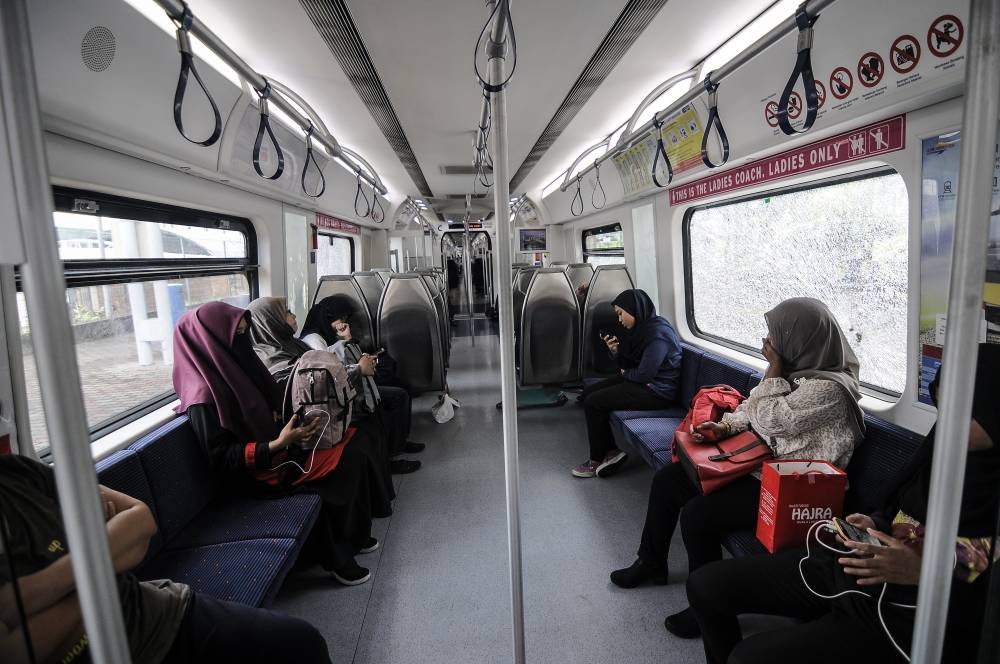
With the 2030 deadline fast approaching, more must be done to convince Malaysians that they need not rely on their cars for their commutes. The solution, aside from the obvious improvements in the quality of our rail transport, is to replace journeys that can be deemed ‘unnecessarily’ completed with cars.
These ‘unnecessary’ journeys can be identified as car-based journeys under 3 kilometres and are often to and from commercial and leisure areas such as malls, parks, and public transport hubs. They can easily be replaced by buses, bicycles or perhaps even e-scooters. If studied and deployed efficiently, these alternative modes of transport can greatly reduce Malaysians’ car dependencies, as Malaysians would ideally be able to walk safely towards an e-scooter or a bus to get to their destinations, without ever troubling themselves with traffic congestion or parking.
Putting the data to work
With our transport system in its current state, these alternative solutions need to be carefully constructed, targeted, and constantly tweaked to ensure that the rollout is not only beneficial, but also safe for Malaysian commuters. This requires strong partnerships between a number of private and public entities to ensure that everything is thoroughly considered and well-executed.
Commuter data such as volume, start and endpoints, distance, and an infrastructure assessment can help identify popular journeys or journeys with high potential for alternative modes of transport. Additionally, more detailed studies and research can offer best practices for street infrastructure and education, which can help guide policymaking to ensure that pedestrians, cyclists, and e-scooter users can travel safely with shelter from the sun and rain, and without fear of other motorists.
Industry players such as Beam, APAC’s leading shared micromobility service provider, have helped greatly in contributing and corroborating this information. Our work with various local research groups, academics, and authorities; and wider collaborations with the Micromobility Research Partnership — a group of academics and researchers from the APAC region – have helped advance conversations at policy-level on public transport, first and last mile-connectivity and micromobility vehicle use in Malaysia. These have led to positive discussions regarding safety, infrastructure, and city planning, resulting in several e-scooter introductions and trials in various areas across the country.
In the suburbs of Seremban, residents of Iringan Bayu are now using Beam e-scooters for leisure or quick trips to the store; while in Kuantan, tourists can now scoot safely and take in the sights along the city and its riverfront esplanade without having to be in a car. In the Klang Valley, more people are starting to utilise e-scooters to get to work, leisure and public transit, with the number of Beam e-scooter riders increasing by 60% over last year. These introductions have proved to be positive, with a survey carried out by Beam indicating that 52% of respondents felt more likely to consider using public transportation thanks to the availability of shared e-scooters. Overall, 60% of respondents felt positive about the introduction of shared e-scooters in their cities.
These positive responses and perceptions on e-scooters have been encouraging and are a result of a combined effort between all parties, public and private, to make data and research driven decisions that work towards solving an aching problem in Malaysian mobility.
But even as these survey results and data collected may seem small and insignificant to the bigger transport picture, these experiments and trials will be able to give us more detailed and insightful information about our collective needs, wants, and patterns as commuters. With more clear and reliable data to rely on, more effective solutions can be conjured to serve our exact needs.
Data can tell us many things about our nuances as Malaysians, but it is imperative that our efforts to effectively use this data to transform the nation starts now — not just in terms of transport mobility, but also from economic and social standpoints.
*This is the personal opinion of the writer or publication and does not necessarily represent the views of Malay Mail.


