







AUG 5 — Media people are a judgy bunch.
It comes with the job. A journalist with poor judgement won’t be a journalist for long.
So when I saw another newspaper post screencaps of Hospital Kuala Lumpur’s urinals overflowing with bodily waste, my first thought was that the sub-editor or whoever was posting the article lacked taste.
Yet isn’t that our job as journalists? To decide what is relevant, and to make the relevant interesting?
I am very grateful for the public healthcare system.
Let us not, however, pretend our public hospitals aren’t full of biohazards.
I’d managed the entire time, with cancer, before my surgery to not catch more than a very brief fever but it took just one night being warded in HKL to be down with a nasty throat infection.
The toilet in the HKL women’s daycare ward is the stuff of germaphobe’s nightmares, with puddles of water everywhere, some even ankle high.
For some reason (I suspect budget cuts) there was no soap.
Of course the smell I most associate with Malaysian public hospitals was everywhere; the ammonia-laced odour of urine.
The first thing I noticed when I visited a Singapore hospital was how clean it smelled. Not even the toilets smelled of wee.
Of course we can play the whole blame game or hand wringing melodrama but the reality is that our hospitals are full, our cleaners overworked, the hospitals underfunded.
There was a game I used to play a few decades ago called Theme Hospital.
It was all about, unsurprisingly, designing hospitals.
The consequences of poor choices would include your patients throwing up in the corridors, and if you did not hire enough janitors, your hospitals, and the game, would quickly become a nightmare.
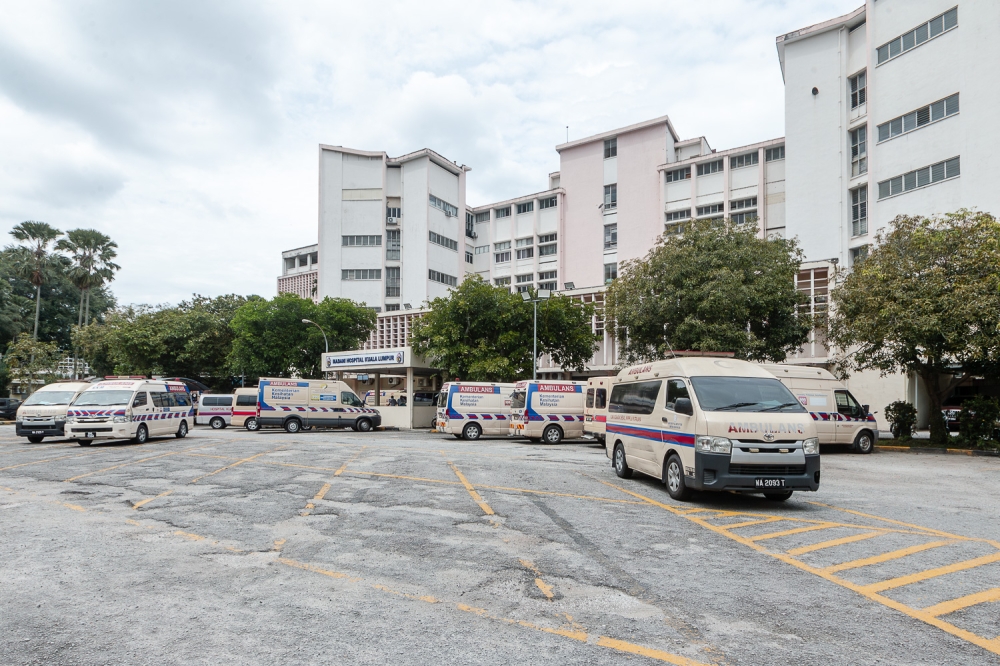
I wish the articles we see about our public healthcare system were better than “oh look this is bad”, quotes from some analyst, hand wringing and then few things change unless an election is around the corner.
The problem is the whole structure of government and how things are run. are far too opaque.
Everyone should be able to know or find out from easily accessible sources the structure of everything, not just our public hospitals.
Don’t tell me to ask AI as due to there not being accessible public records there is nothing the robots actually know about this.
Disclaimer: For the purpose of this article (and because some overly optimistic person will insist on it) I checked with LLMs and none of them gave me the correct number of currently serving oncologists, nor which public hospital actually has them on-site.
You cannot fix a structure that is not properly documented, nor can you attend to the rot until you can properly gauge what or where it is.
What I’m trying to say is that right now more people need to have an understanding of how the system works before it can actually be fixed.
We can’t rely on the politicians for that because for too many of them, the extent of their knowledge is knowing that even in a pandemic they will be given access to the VIP wards.
I guess it’s up to us, the keepers of record, whether journalists or bloggers, to learn how to tell stories again because some stories need telling.
In truth I’ve been dealing with my own existential crisis and wondering if life has any meaning anymore.
Then I read about that Times journalist who wrote about the Fifa debacle, read Sarah Kendzior (my current favourite columnist) and how she stubbornly keeps pushing out books and her newsletter, and I remember the many writers who still keep me reading and writing, and hoping.
Our public hospitals are imperfect, true, but we’re lucky to have them but we need, also, to fight for them and sometimes that fight is not better served by screenshots of a urinal.
* This is the personal opinion of the columnist.


