


KUALA LUMPUR, Nov 3 — When Tan Shing Win made coffee outdoors, he noticed something that kept bothering him: the same beans and brewing recipe could produce a different cup depending on the environment.
It was an everyday observation, but one that eventually helped shape his presentation at the 2026 World Barista Championship (WBC) in Panama, where he finished second — the best result ever achieved by a Malaysian competitor.
Moisture became the focus of his routine, reflecting a question that had followed him through years of making coffee in different settings.
“Sometimes, even when using the exact same brewing recipe, the results could be quite different depending on the environment,” Shing Win says. “This made me wonder how factors such as humidity might be influencing the way we brew coffee.”
Moisture, he explains, is not often a major topic of discussion in coffee brewing. Yet it was something his team paid attention to when adjusting coffee for different environments.
“Over time, I became more curious about how something we often overlook could influence the way we make coffee. That curiosity eventually led me to explore moisture more deeply and make it the central idea of my routine.”
The approach is characteristic of Shing Win: technical, observant and more interested in pursuing a question than presenting an elaborate story.
That quality is familiar to his coach, Keith Koay, who first met him in 2016, shortly after opening a coffee shop in Taman Paramount, PJ.
(That little coffee shop, of course, is none other than One Half Coffee; it would eventually pave the way for other now-veteran establishments in the local F&B scene, such as Dou Dou Bake and One Half Roastery.)
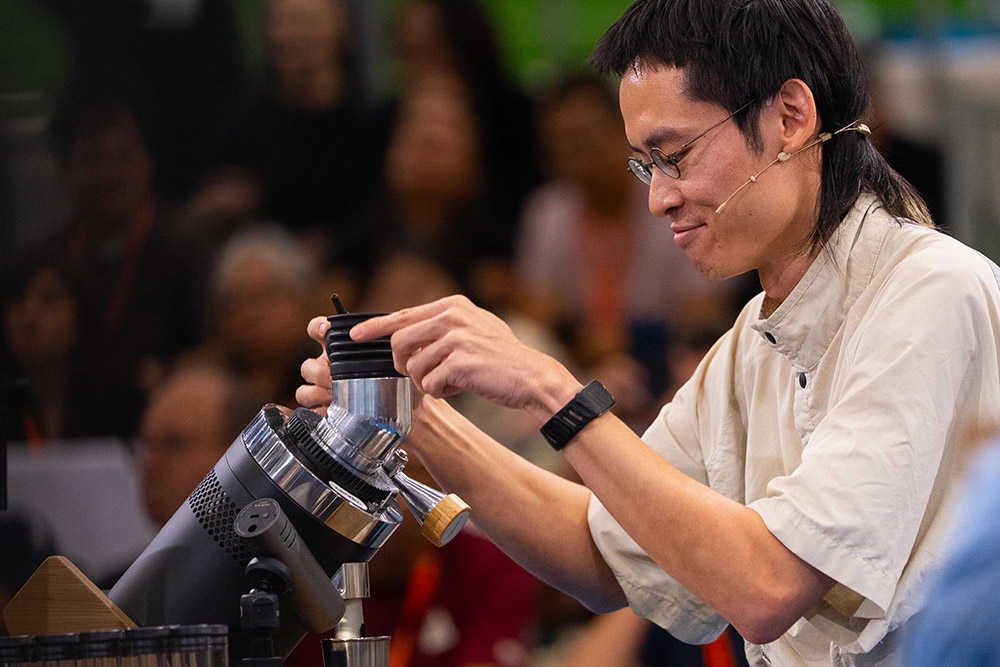
“He came in as a customer, curious about coffee and searching for answers about a career path that was still quite blurry to him,” Keith recalls.
He eventually hired Shing Win as a part-timer. What stood out was not necessarily his talent, but his attitude towards learning.
“He was never in a rush to prove himself. Instead, he was happy to observe, learn humbly behind the bar, and build his understanding of coffee from the ground up.”
Keith, himself a three-time Malaysian Barista Champion (winning the titles in 2016, 2018 and 2020), says Shing Win was willing to dedicate time to the craft without expecting immediate results.
Those early qualities, he believes, helped bring the barista to the world stage.
“One question we kept coming back to throughout our preparation was: ‘We want to see someone who can change or inspire the coffee industry. Do you think what you’re presenting in these 15 minutes truly represents that?’” Keith says.
Sometimes, Shing Win’s response was silence. Keith felt that, deep down, he knew when the answer was no.
“So we went back, questioned our ideas, and continued refining the routine. It wasn’t necessarily about finding something more impressive to present, but making sure that everything we put on stage had a purpose and something meaningful to contribute.”
The moisture concept emerged from an ordinary part of their lives. The two often went camping and noticed that coffee brewed outdoors, particularly in hot and humid conditions, could taste remarkably different from the same coffee made at home.
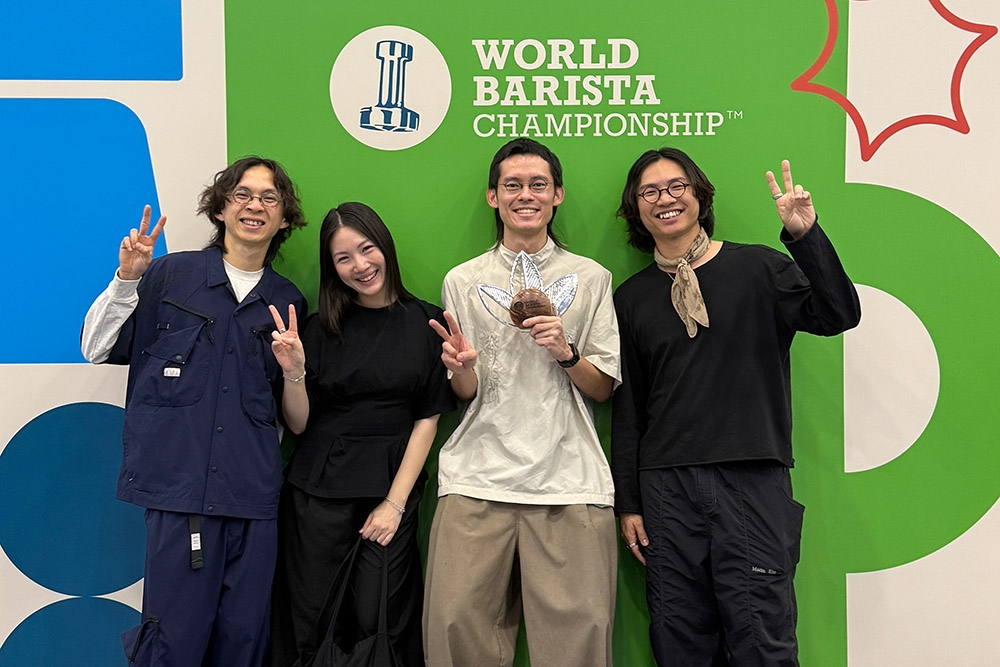
“That observation sparked our curiosity. We wanted to understand why, and whether we could find an explanation through research and experimentation,” Keith says.
Shing Win’s competition routine also had to translate that curiosity into a compelling coffee experience. One challenge was showcasing the delicate character of a washed Geisha in a milk beverage.
Rather than selecting different coffees for each course, as competitors commonly do to maximise the potential of individual drinks, the team chose to use the same coffee across all three.
“We wanted to preserve the coffee’s identity while creating enough intensity for its flavours to shine through the milk,” Shing Win says.
They explored how moisture within the beans could help achieve that without changing the roast profile.
“It reminded me that sometimes, improving a cup isn’t about changing the coffee itself, but understanding how to work with what the coffee already has to offer.”
For Keith, that process was not separate from their everyday work.
“Much of what we presented on stage reflects what we quietly practise behind the bar every day,” he says. “It’s not necessarily something loud or visually spectacular.”
Behind the simplicity, Keith points to “a lot of observation, questioning, experimentation and attention to detail”, which are habits that support their philosophy of making tasty coffee.
What mattered to him was that Shing Win had brought this everyday approach onto the world stage and demonstrated that it belonged there.
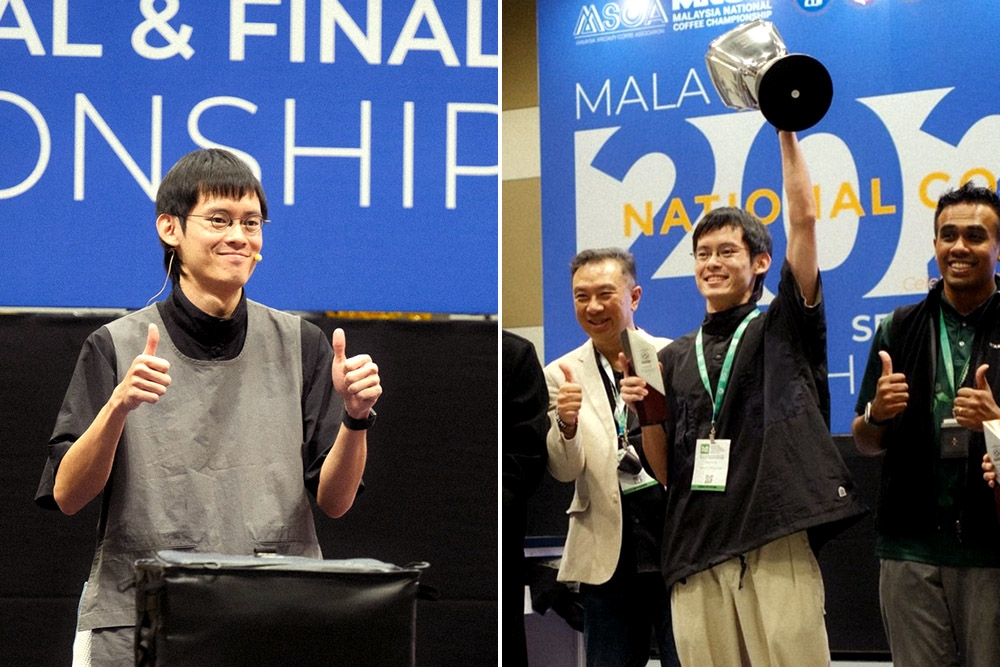
Naturally, second place brought mixed emotions to Shing Win. He was happy, shocked and proud to finish runner-up in his debut at the championship, but the knowledge that first place was within reach made the moment bittersweet.
However, this historic result only fully sank in after he returned to Malaysia.
Shing Win says that his achievement was also the product of everyone who had supported him throughout the preparation, ever since he won the Malaysia Barista Championship last year: “My coach, mentor and team believed in me even before I believed in myself.”
He also received encouragement from the international coffee community, whose generosity moved him deeply.
“I think the biggest lesson I’ve learned is to be more selfless. So many people have shared their knowledge, experience and time with me without expecting anything in return.”
Shing Win’s milestone achievement has struck a chord across the Malaysian coffee community, many of whom are his peers, supporters, mentors and comrades in arms.
Jason Loo, who finished fourth at the 2025 World Barista Championship after winning the Malaysia Barista Championship four times, has been cheering him on.
“Seeing Shing Win follow that with a second-place finish reinforces the belief that our success is not a one-off achievement. We are building the foundation, the experience, and the confidence to compete consistently at this level,” Jason says.
He believes the country should also reconsider how it sees its place in the global coffee scene.
“We should no longer see ourselves as a small coffee nation trying to catch up. We have our own identity, talent, culture, and stories to bring to the world.”
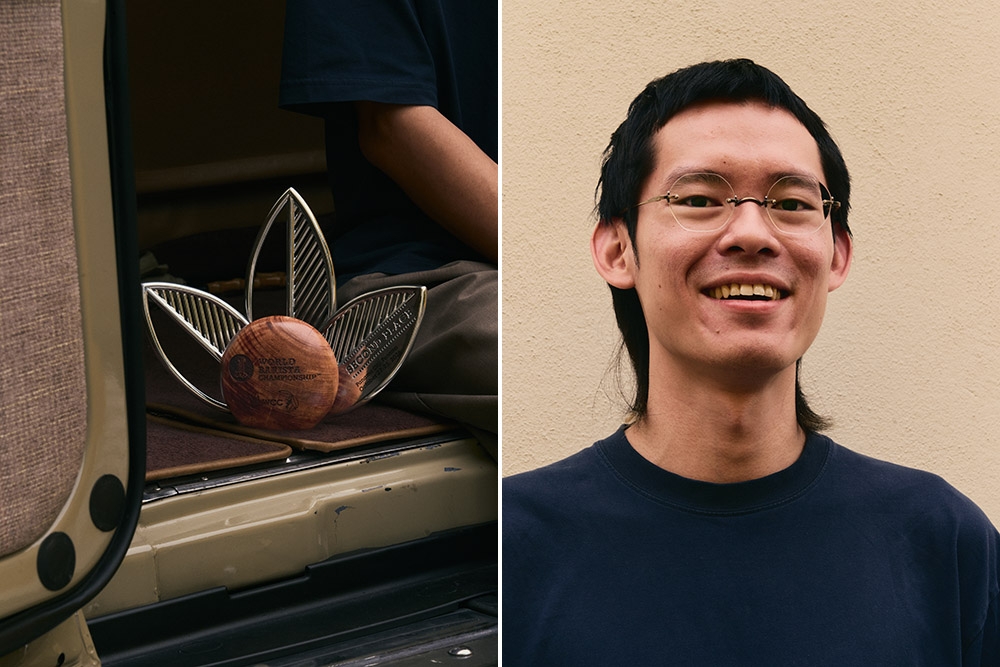
That shift might depend on an ecosystem the competitors find themselves in. Chiam Tow Jin — president of the Malaysia Specialty Coffee Association, co-founder of The Roast Things and the 2025 Malaysia Cup Tasters Champion — feels the achievement reflects both individual commitment and the wider industry that has developed around baristas.
He says, “Behind them are companies and teams willing to invest time, resources, and belief in their development. Equally important are the customers whose appreciation for good coffee makes it commercially sustainable for businesses to keep investing in their people.”
Competition also has value beyond the podium. According to Surender Kumar (or Suren), the 2023 Malaysia Barista Champion and co-founder of Ruits Juices: “It develops discipline, attention to detail and a better understanding of how to communicate what you do,” he says.
Suren hopes younger baristas will be empowered by Shing Win’s story to take their craft seriously and consider the different ways they can contribute, whether through competing, teaching, coaching or building businesses.
To these aspiring baristas, Keith’s advice is straightforward: find a good team, work hard, stay curious and “pray for a little luck”.
Shing Win agrees, adding that his next step is “to do the same for others. To share what I’ve learned, offer support wherever I can, and pass on the same positive energy that so many people have given me throughout this journey.”
No doubt his triumph at the WBC will inspire the next generation of Malaysian baristas, but the challenge now is to make that level of performance less of an exception and more of a standard.
Together, we can build a coffee culture in which more Malaysians have the knowledge, support and resources to compete on the world stage.
For more food fables and café chronicles, visit Life for Beginners.


